Menu

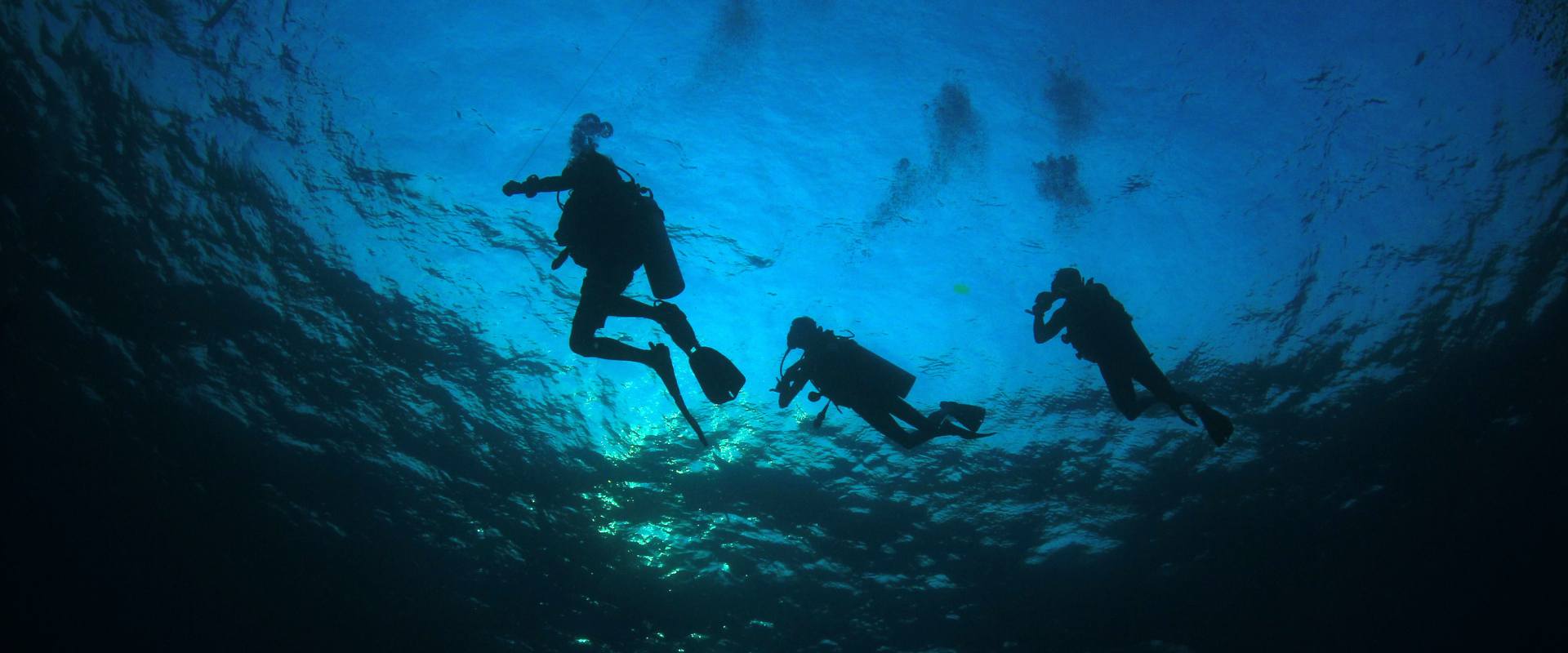
Here’s the short version: you check in, get briefed, spend some time in a swimming pool getting comfortable breathing underwater, then board a boat for the 30–45-minute ride out to Grande Island. Once there, an instructor stays beside you for the entire guided dive, before you surface, relax with refreshments on board, and head back to the jetty. Door to door, a scuba dive at Grande Island takes around 5 to 6 hours. That’s the outline. What actually matters — what it feels like, what surprises first-timers, and what nobody mentions beforehand — is everything that happens in between, and that’s what this walkthrough covers, step by step. It also answers the question most people are quietly asking alongside it: whether this is actually safe, and how to tell a properly run dive from a risky one.
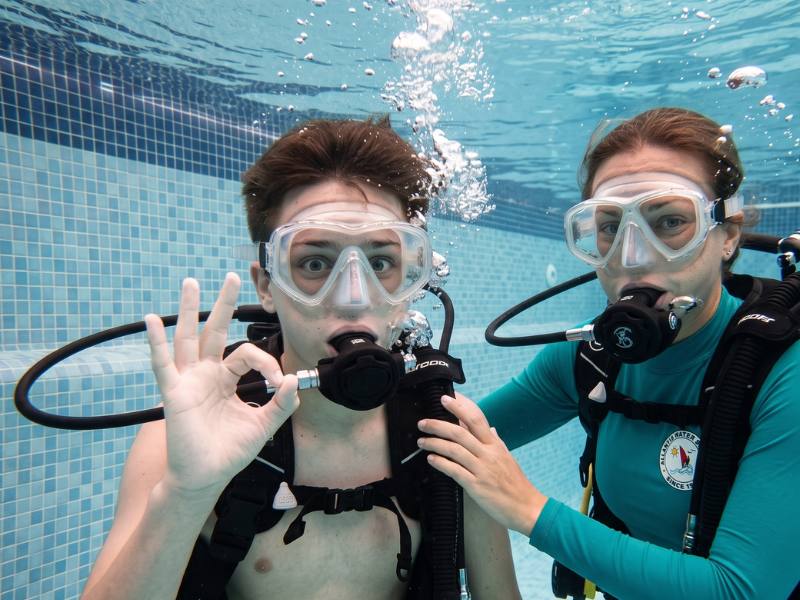
Every guest goes through the same sequence, in this order, no matter how confident or nervous they arrive:
A few practical basics make the day smoother: wear your swimwear under your clothes so you’re not changing at the boat, use reef-safe sunscreen rather than the regular kind, and expect to be out on open water for a good part of the morning or afternoon — a cap and sunglasses you don’t mind getting a little wet go a long way.
None of this is rushed, and that’s deliberate. The structure exists so that someone who has never so much as put their face underwater in a pool can do this safely and comfortably on their first attempt. It mirrors the standard used for entry-level “discover” dives worldwide — a format built specifically for beginners, with no certification required beforehand, a depth ceiling well within comfortable limits, and an instructor required to stay within arm’s reach for the entire dive (source: PADI). Grande Island simply happens to be one of the more rewarding places in India to do it.
The 5–6 hour total surprises people who assume the “dive” is the whole trip. In reality, the underwater portion is only part of it — the pool session, the boat rides, and the surface time are what make the actual dive feel unhurried rather than like a rushed checklist.
Goa welcomed over 1.08 crore tourists in 2025 alone (source: Department of Tourism, Government of Goa), and a growing share of them are booking watersports and adventure activities rather than just beach time. That growth is exactly why the market has filled up with everyone from properly certified operators to random touts working a beach umbrella. The sequence above — briefing, pool session, boat, dive, return — isn’t just a nice-to-have structure. It’s the actual dividing line between an operator worth trusting and one that isn’t, and it’s worth checking for before you hand over any money, no matter which company you eventually book with.
An instructor stays within arm’s reach for the entire underwater portion of a beginner dive — no exceptions. That single detail is the clearest indicator of whether an operator is running a properly certified dive, anywhere in Goa.
Most beginners walk into the pool session worried about the same two things: breathing underwater, and clearing water out of their mask if it floods. Almost everyone is surprised by how quickly it stops feeling strange — usually within a few minutes. Instructors work through it step by step, at the guest’s own pace, until breathing through a regulator feels ordinary rather than alarming. Nobody moves on to the boat until they’re genuinely at ease, not just technically finished with the drill.
The realistic minimum is around age 10, which lines up with the global standard for entry-level discover dives — PADI’s own guidance sets the minimum age at 10, with depth limits adjusted accordingly (source: PADI). Basic swimming ability helps but isn’t mandatory, since the instructor manages buoyancy and movement throughout. In practice, a healthy 10-year-old and an average adult tend to have an equally comfortable first dive. If the experience clicks and someone wants to go further, the natural next step is a full scuba diving course and an actual certification.
Scuba diving tends to intimidate first-timers more than almost any other adventure activity in Goa, simply because breathing is involved, and breathing feels like the one thing you can’t afford to get wrong. In practice, it’s the opposite: because breathing underwater is treated as the entire point of the pool session, nobody heads to Grande Island until it already feels ordinary. Guests who’ve never tried a watersport of any kind — no parasailing, no jet-skiing, nothing — go through the exact same sequence as seasoned adventure travellers, and finish the day having done something most of their friends back home haven’t. That’s usually the real appeal: not the adrenaline, but the story that comes with it. Travelling as a group where not everyone wants to dive? It’s worth looking at a broader watersports package in Goa that bundles the dive alongside other activities, so nobody’s just waiting around on the beach.
Ready to make it real? Call or WhatsApp us at +91 96079 04114 — we’ll sort the rest.
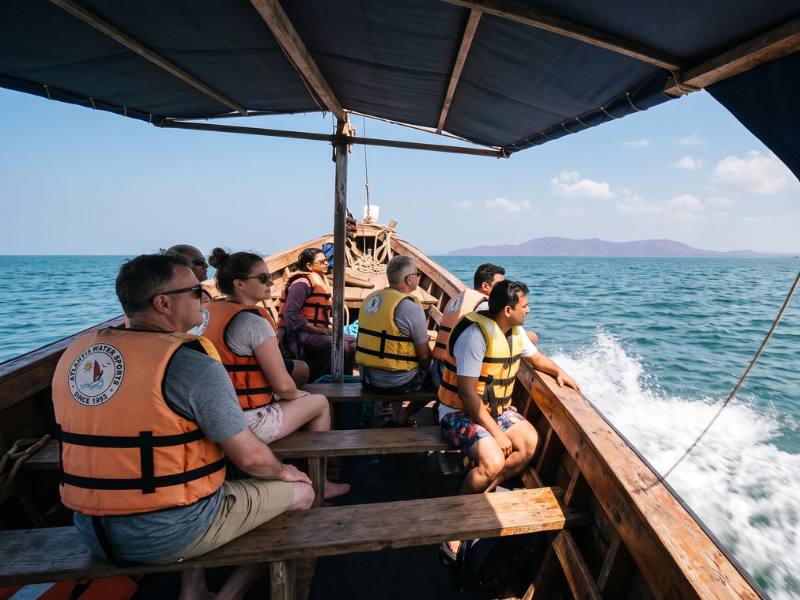
Book Your Dive at Grande Island WhatsApp UsThe boat ride out is part of the experience, not just transport. At 30–45 minutes each way, guests get scenic views of the Goan coast, fresh sea air, and occasionally a dolphin sighting along the way — Goa’s coastal waters are a regular spot for dolphin watching outings for exactly this reason. The sea around Grande Island is usually calm, though anyone prone to motion sickness is better off taking something for it before boarding rather than during the ride.
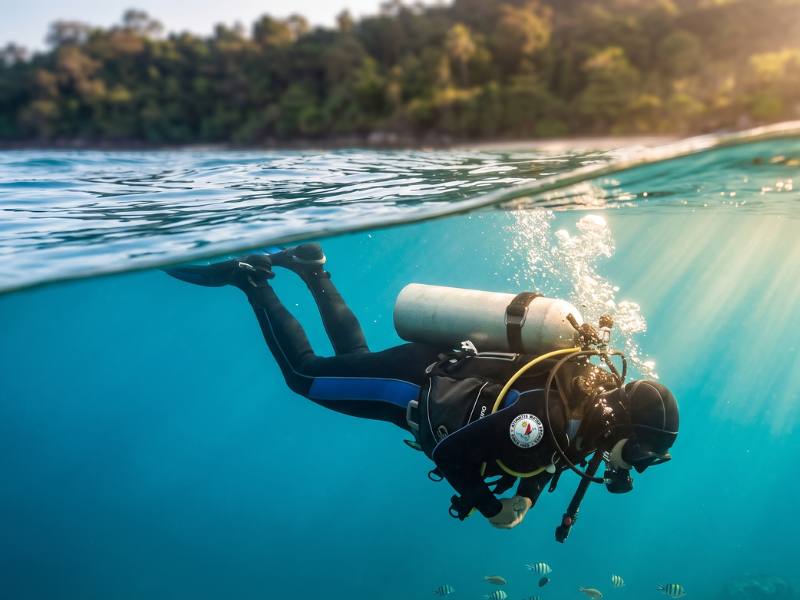
Underwater, the picture that greets most divers is clear blue water, schools of colourful fish moving in loose formation, and rocky reef structures rather than a flat sandy bottom. Sightings of species like pufferfish and angelfish are common, though visibility shifts with the season — generally at its clearest during the peak diving months rather than right after the monsoon.
The centrepiece of most dives here is Suzy’s Wreck, a genuinely sunken vessel resting near Grande Island that has, over decades, become an artificial reef. The wreck’s remains are now covered in marine growth and surrounded by fish life, which is what makes it one of the most visited dive sites in Goa rather than just a curiosity for wreck-diving specialists. It’s an approachable site for a first dive precisely because it sits at a manageable depth and doesn’t demand advanced skills to appreciate.
What’s harder to convey until you’ve actually done it is how ordinary breathing underwater starts to feel within a few minutes — the sound of your own regulator, the slight resistance of each breath, and then the strange calm of realising you’re hovering weightless a few metres above a shipwreck instead of standing on solid ground. Most first-timers describe it less as an adrenaline rush and more as a kind of quiet disbelief that keeps resurfacing (no pun intended) for the rest of the dive.
Panic is the question every nervous first-timer asks about, even if they don’t say it out loud. In practice, an instructor stays beside each guest for the full dive specifically so that if someone feels uneasy, there’s an immediate response — usually a slow, controlled ascent to a shallower, more comfortable depth, or a return to the surface if needed. Genuine panic underwater is rare precisely because of how the pool session and briefing are structured beforehand; guests are eased into it rather than dropped into open water cold.
Weather and sea conditions are the other variable guests rarely think to ask about. A properly run operation checks conditions before heading out and will reschedule rather than push through choppy seas or poor visibility — a call that protects the dive rather than disrupting it. If a boat trip gets postponed on the day, it’s usually this, not disorganisation.
A short, practical list of what people wish they’d done differently before diving:
Worth knowing going in: a single dive like this one is a taster, not a certification. It qualifies as a discover-level experience rather than a licensed scuba qualification, which is exactly why no prior experience is required. Guests who want an actual, internationally recognised diving certificate — the kind that lets you dive anywhere in the world without an instructor attached — typically follow up with a proper multi-day certification course rather than repeating the single-day dive.
On timing: the diving season at Grande Island runs roughly October through May. The earlier months bring fresh, post-monsoon marine activity, while March through May tends to bring warmer water and often the best visibility of the year — which matters more for how much you’ll actually see than most people expect going in.
I still remember a guest a few years back — mid-forties, told me flat out she’d never even put her face in a pool before, let alone tried to breathe underwater. Through the briefing she barely said a word, and in the pool session I could see her counting the minutes until it was over. But something shifted the moment she took her first breath underwater out at Grande Island. She surfaced with a look I’ve seen on a hundred faces since then — half disbelief, half pure joy. She ended up staying an extra week in Goa just to dive twice more before flying home. That’s the moment I built this business around: not the dive itself, but what happens on someone’s face right after it.
What actually happens during a scuba dive at Grande Island, from start to finish?
You check in and complete a safety briefing, then get pool training before boarding a boat for the 30–45-minute ride to Grande Island. After the guided dive, you relax with refreshments and return by boat. The full experience takes about 5 to 6 hours door to door.
Is pool training before the dive actually necessary?
Yes — it’s how first-timers get comfortable breathing through a regulator and clearing their mask before ever entering open water. Most beginners are surprised by how quickly it starts to feel normal, usually within a few minutes, and instructors won’t move on until each guest is genuinely at ease.
How long is the boat ride to Grande Island, and what’s it like?
The ride takes roughly 30 to 45 minutes each way, with scenic coastal views, fresh sea air, and occasional dolphin sightings along the route. The sea is usually calm, though anyone prone to motion sickness should plan for it in advance.
What will I actually see underwater at Grande Island?
Expect clear blue water, schools of colourful fish, and rocky reef structures rather than flat sand. Species like pufferfish and angelfish are commonly spotted, and visibility is generally best during the peak diving months.
What is Suzy’s Wreck, and can beginners dive there?
Suzy’s Wreck is a genuinely sunken vessel near Grande Island that has become an artificial reef over the decades, now covered in marine growth and surrounded by fish life. It sits at a manageable depth, which makes it one of Goa’s most popular sites and a realistic option for a first-ever dive.
What happens if I panic underwater during the dive?
An instructor stays beside you for the entire dive, so if you feel uncomfortable, they can help you calm down and, if needed, guide a slow ascent to a shallower depth or back to the surface. Genuine panic is rare, largely because the pool session and briefing ease guests in beforehand rather than dropping them into open water cold.
What should I do or bring before a scuba dive at Grande Island?
Get a proper night’s sleep, eat breakfast before the boat ride, and bring a towel and change of clothes for afterward. It’s also worth packing waterproof protection for your phone, wallet, or anything else you don’t want getting wet.
What’s the one moment most people remember about their dive?
Almost everyone points to the same moment: the first breath they take underwater, and the realisation that they can comfortably explore beneath the surface. It’s what guests talk about long after the trip is over.
What’s the minimum age to scuba dive at Grande Island, and do I need to know how to swim?
The realistic minimum age is around 10, which matches the global standard for entry-level discover dives set by PADI. Basic swimming ability helps but isn’t mandatory, since an instructor manages buoyancy and movement throughout the dive.
When is the best time of year to dive at Grande Island?
The diving season runs roughly October through May. Early season months bring fresh post-monsoon marine activity, while March to May typically offers warmer water and the best visibility of the year.
How do I know if a watersports operator in Goa is actually legitimate?
Look for a physical, walk-in office rather than just a beach stall, transparent pricing, and instructors certified through recognised bodies like NIWS or PADI. A track record of genuine reviews and any formal affiliation with Goa Tourism are also strong signals — Atlantis Watersports has operated on that basis since 1993.
If you’ve read this far, you already know more about what actually happens on a Grande Island dive than most people do before they book. There’s no mystery left to it — a briefing, some time in the pool, a boat ride with a decent chance of dolphins, a guided dive with someone beside you the whole way, and a slow, relaxed trip back. What’s left is simply deciding to do it.
Thank you for spending this much time thinking through the details with us — it tells us you’re the kind of guest who wants to actually understand what they’re signing up for, not just book the first thing that shows up on a map. That’s exactly who we built this for. Whether this ends up being one activity among several on your Goa trip, or the one thing you build a day around, we’d rather you go in knowing exactly what to expect than hoping for the best.
Give us a call, send a WhatsApp message, or walk into our office on Calangute-Baga Road or in Anjuna. We’ll take it from there.
Charlie and the Atlantis Team
Ready to make it real? Call or WhatsApp us at +91 96079 04114 — we’ll sort the rest.
Book Now WhatsApp Us