Menu


Yes — watersports in Goa are safe. But that answer comes with a condition that every tourist planning a beach day needs to understand: safety in Goa's watersports is entirely determined by who you book with, not by the activity itself. The ocean doesn't become dangerous when you get on a jet ski. It becomes dangerous when the person handing you a life jacket hasn't been trained to respond if something goes wrong. Watersports safety in Goa is real, it's regulated, and it's achievable — but it requires you to make one smart decision before you ever reach the beach.
Goa welcomed over 1.04 crore tourists in 2024 — a 21% year-on-year increase, making it India's most visited domestic destination (source: Department of Tourism, Government of Goa, January 2025). With that volume of visitors, the watersports industry has grown enormously. So has the number of operators. And not all of them are running to the same standard. This guide cuts through the noise, tells you exactly what safe watersports looks like, what the risks actually are, and how to make sure your experience in Goa is the one you came for.
The honest answer is that the risk in Goa's watersports market is rarely the sea. Rip currents, weather, and wave conditions are predictable factors that experienced operators monitor and plan around every single day. The real risk — the one that causes accidents, injuries, and the kind of incidents that make headlines — is the unlicensed, unverified beach vendor who has no certification, no emergency protocol, no safety briefing, and no accountability when something goes wrong.
In January 2025, a 27-year-old tourist from Pune and her assigned instructor both died during a paragliding session in Keri, North Goa. The Goa Tourism Department confirmed that no official permission had been granted for that activity at that location — it was an unlicensed operator (source: India Today, 2025). In March 2026, a parasailing cable snapped mid-air at Baga Beach, sending a tourist into the sea. He survived, but only because rescue was nearby. Police opened an investigation into equipment failure. A boat capsizing near Calangute Beach resulted in one death and twenty rescues — and police confirmed that two of the passengers had not been wearing life jackets (source: Gulf News).
None of these incidents happened at verified, registered operators. They happened in the grey zone of Goa's adventure market — the beach touts, the unlicensed vendors, the operators who set up with a jet ski and a phone number and no certification whatsoever. That is the risk. Not the water. The operator.
Goa's Watersports Policy — governed under The Goa Registration of Tourist Trades (Amendment) Act 2011 and updated in 2020 — is clear: no unregistered watersports operator is legally permitted to operate in the state. All operators are required to hold a Safety Certificate under standards set by the National Institute of Water Sports (NIWS), the apex government body for recreational watersports in India, established by the Ministry of Tourism in 1990 and headquartered in Panaji, Goa (source: NIWS / niws.nic.in). The policy mandates demarcated operating zones, fixed operating hours of 6:30 am to 6:30 pm, and a complete ban on activities during monsoon, unsafe weather, and storm conditions.
Despite this framework, enforcement is inconsistent. Beach touts continue to operate — because tourists don't know to ask for certification, and because the cost difference between a licensed and unlicensed operator can look attractive in the moment. That gap in awareness is exactly what this blog exists to close. When you know what to look for, you stop being a target.
Before handing over any money to any watersports operator in Goa, ask this: "What safety measures and certified staff do you have?" A legitimate operator will answer clearly — describing their equipment, their NIWS or PADI certifications, their emergency response plan, and their safety briefing process. An unlicensed operator will deflect, rush you, or quote you a lower price to move the conversation along. That moment of hesitation is your answer.
Safe watersports isn't a feeling. It's a checklist. A verified operator in Goa — one that meets the legal standard set by the Government of Goa and NIWS — operates in a specific, identifiable way. Here is exactly what that looks like in practice, so you know what to expect before, during, and after any activity.
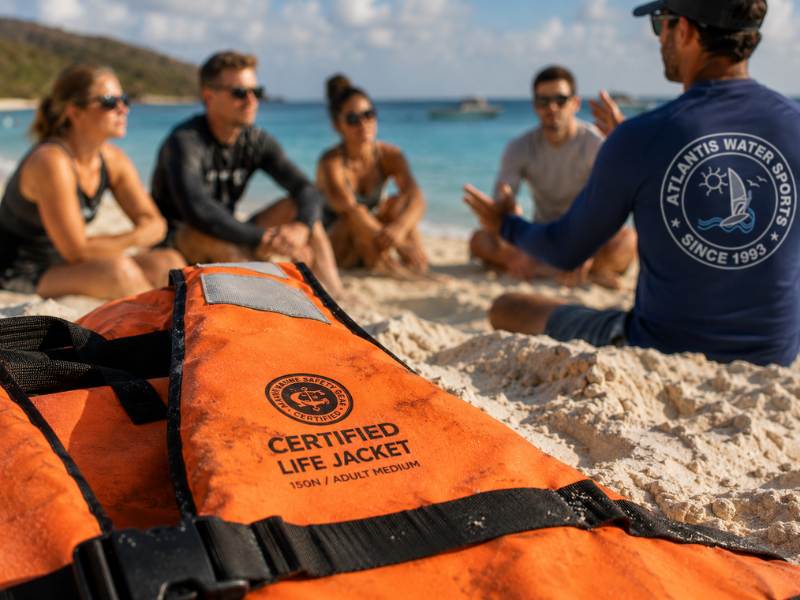
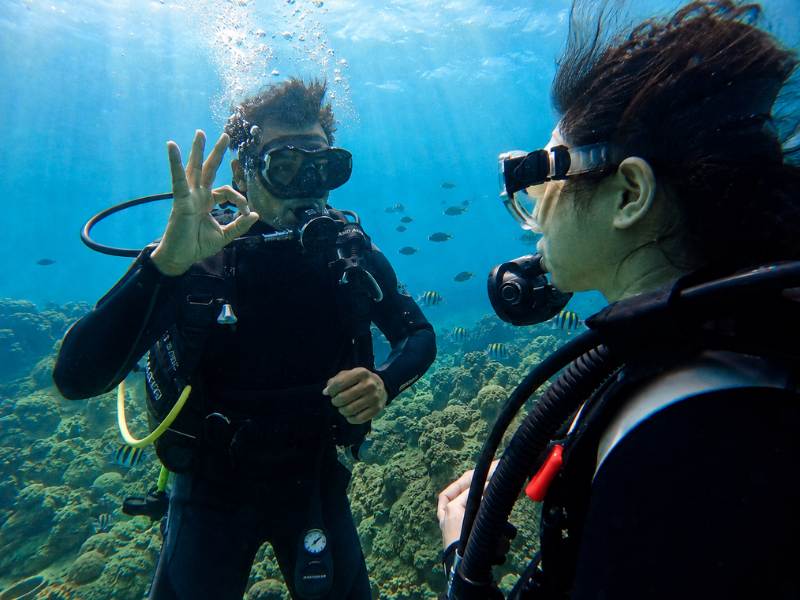
Every session with a legitimate operator starts with a safety briefing. Not a two-sentence disclaimer shouted over the sound of a jet ski engine — a genuine, structured briefing that covers what to do, what not to do, hand signals between you and your instructor, and what happens in an emergency. At Atlantis, this briefing is non-negotiable. It happens before every activity, for every guest, every time.
Equipment is inspected before use. Certified life jackets — not the sun-bleached, cracked foam vests you sometimes see piled on the back of a beach shack — are fitted properly to each participant. Helmets are provided for relevant activities. Communication equipment and safety boats are positioned and ready before anyone enters the water. This is the standard. Any operator who skips these steps is not a safe operator, regardless of what their signboard says.
A responsible operator asks about your health before you participate. The questions matter: Do you have a heart condition? Are you pregnant? Have you had recent surgery? Do you have severe back problems? These are not bureaucratic formalities — they are the assessments that determine whether an activity is physically appropriate for you. If an activity isn't suitable for a particular guest, a good operator doesn't push it. They recommend alternatives that deliver a great experience without the risk. Atlantis has guided children as young as 10 through scuba diving in Goa — and equally, has redirected guests to safer options when the activity wasn't right for them. Both decisions come from the same place: genuine care for the guest in front of you.
Staffing during active sessions is what separates a professional operation from a casual one. Trained instructors and support staff are present at all times — not watching from the shore, but actively positioned on safety boats, in the water, or immediately adjacent to participants throughout the session. Weather and sea conditions are assessed every morning and continuously monitored. If conditions deteriorate mid-session, the activity stops. Not paused — stopped. Guests are brought safely back to shore, and the session is rescheduled or refunded. The schedule bends to safety, not the other way around.
This is the most practical thing you will read before your Goa trip. Here is a five-point verification process you can complete in five minutes — before you agree to anything, before you pay anything, before you put on a life jacket.
Booking through a verified operator like Atlantis Watersports packages in Goa means every one of these five points is already met before you arrive. That's the value of choosing an operator with over three decades of continuous operation — you're not doing the verification work yourself. It's already been done, and the track record speaks for it.
"There was a morning — I remember it clearly — when conditions turned fast. We were mid-session and the winds picked up suddenly, the sea went rough within minutes. I didn't wait. I called it immediately, pulled every guest out of the water, and we had everyone safely back on shore before most of them had even fully understood what had happened. Some guests were disappointed — they'd come for the thrill and we'd cut it short. But safety always comes before schedules. That decision is never a hard one for me, because I know what the alternative looks like. We've been doing this since 1993, and the reason we're still here — and that our guests keep coming back — is because we've never once put a booking above a person's safety. When something does go wrong on the water, my team doesn't freeze. The activity stops immediately, we secure every participant, first aid goes to whoever needs it, and if further medical attention is required, we get that person to the nearest facility. Every step is practiced. That's what 30 years builds — not just experience, but instinct."
Ready to book with an operator you can actually trust? Atlantis has been keeping guests safe in Goa since 1993 — certified, verified, and affiliated with Goa Tourism. Call or WhatsApp us at +91 96079 04114 and we'll sort everything.
View Watersports Packages WhatsApp UsIs it safe to do watersports in Goa?
Yes — watersports in Goa are safe when booked through a licensed, verified operator. The Government of Goa mandates that all watersports operators be registered and hold a Safety Certificate under NIWS standards. The risk comes not from the activities themselves but from unlicensed beach vendors who operate without certification, proper equipment, or emergency protocols. Booking with an established, Goa Tourism-affiliated operator removes that risk entirely.
What is the most common safety mistake tourists make before doing watersports in Goa?
The most common mistake is skipping the safety briefing and overestimating swimming ability. Guests who dismiss the pre-activity briefing as unnecessary formality are the ones most likely to panic or make poor decisions if something unexpected happens on the water. Following your instructor's guidance — every word of it — is the single most effective thing you can do to stay safe.
How do I know if a watersports operator in Goa is legitimate?
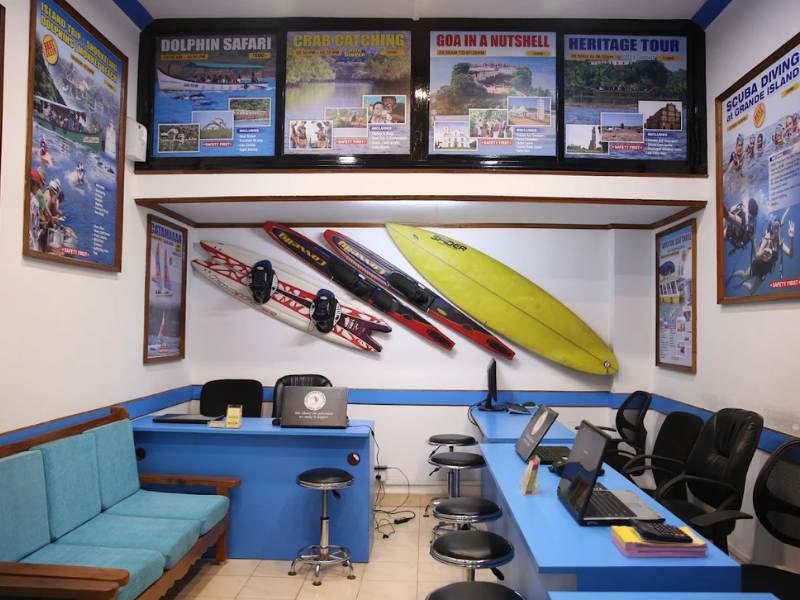
Look for five things: a physical office with a fixed address, affiliation with Goa Tourism, NIWS or PADI-certified instructors, verified TripAdvisor reviews (volume and consistency matter), and a clear, confident answer when you ask about their emergency protocol. An operator who meets all five is a safe choice. An operator who deflects or rushes you past these questions is not. Atlantis Watersports has operated from fixed offices in Calangute-Baga and Anjuna since 1993 and meets every one of these criteria.
What health conditions prevent you from doing watersports in Goa?
Heart conditions, pregnancy, recent surgery, and severe back problems are the primary concerns that responsible operators screen for before any activity. If you have any of these conditions, a good operator will recommend safer alternatives rather than clear you for an activity that could cause harm. Always disclose your medical history honestly — it allows the operator to give you the best possible experience within safe limits.
What should I do if something goes wrong during a watersports activity in Goa?
With a verified operator, a structured emergency protocol activates the moment an issue is detected — the activity stops immediately, trained staff secure all participants, first aid is provided if needed, and the nearest rescue or medical support is alerted if the situation requires it. Your job as a guest is to stay calm and follow your instructor's directions exactly. Every second you spend in compliance rather than panic makes the response faster and safer.
Are watersports safe for non-swimmers in Goa?
Many watersports activities in Goa — including banana boat rides, parasailing, jet skiing with an instructor, and glass-bottom boat rides — do not require swimming ability, provided certified life jackets are worn throughout. Activities like scuba diving are guided entirely by PADI-certified instructors who manage buoyancy, direction, and safety in the water. Non-swimmers should inform their operator before booking so the right activity can be recommended and the correct safety measures put in place.
Is paragliding in Goa safe?
Paragliding in Goa is safe when conducted by a licensed operator at an officially approved site. Incidents involving paragliding fatalities in Goa have, in documented cases, involved unlicensed operators conducting activities at unapproved locations — situations where no official permission existed for that activity at that site. Booking paragliding in Goa through a Goa Tourism-affiliated operator with certified pilots and approved launch sites removes the primary source of risk.
What time of year is safest for watersports in Goa?
The prime watersports season in Goa runs from October to May, when sea conditions are calm and weather is predictable. Watersports are officially suspended during the monsoon (June to September) under Goa's Watersports Policy — the sea during this period is unsafe for recreational activities and no licensed operator conducts sessions. Within the season, conditions are assessed daily — morning weather and tide checks are standard practice at responsible operators before any activity is cleared to run.

Goa's beaches are extraordinary. The Arabian Sea is warm, the visibility underwater is remarkable, and the range of things you can do — from scuba diving at Grande Island to bungee jumping at Mayem Lake — is genuinely world-class. The activities themselves are not the question. The question has always been: who is taking you there?
Three decades in this business have taught me one thing above everything else: the guests who have the best experiences in Goa are not the ones who took the cheapest deal on the beach. They're the ones who made one careful decision at the beginning and then gave themselves completely to the experience — because they trusted the people around them. That trust has to be earned. It's earned through certification, through transparency, through a team that knows exactly what to do when things go wrong and has practiced it enough times that the response is second nature.
That is what Atlantis has been building since 1993. Not just a business. A standard. Come and experience the difference for yourself — you'll feel it the moment the briefing starts and the life jacket goes on properly and your instructor looks you in the eye and tells you exactly what's about to happen.
We're on Calangute-Baga Road and in Anjuna. Walk in anytime. Or call us, or message us — we're always happy to answer questions before you book. That's part of the service too.
— Charlie and the Atlantis Team
You choose the adventure. We make it happen — safely, professionally, and with over 30 years of experience behind every session. Ready to book? Call or WhatsApp us at +91 96079 04114.
Explore All Activities WhatsApp Us